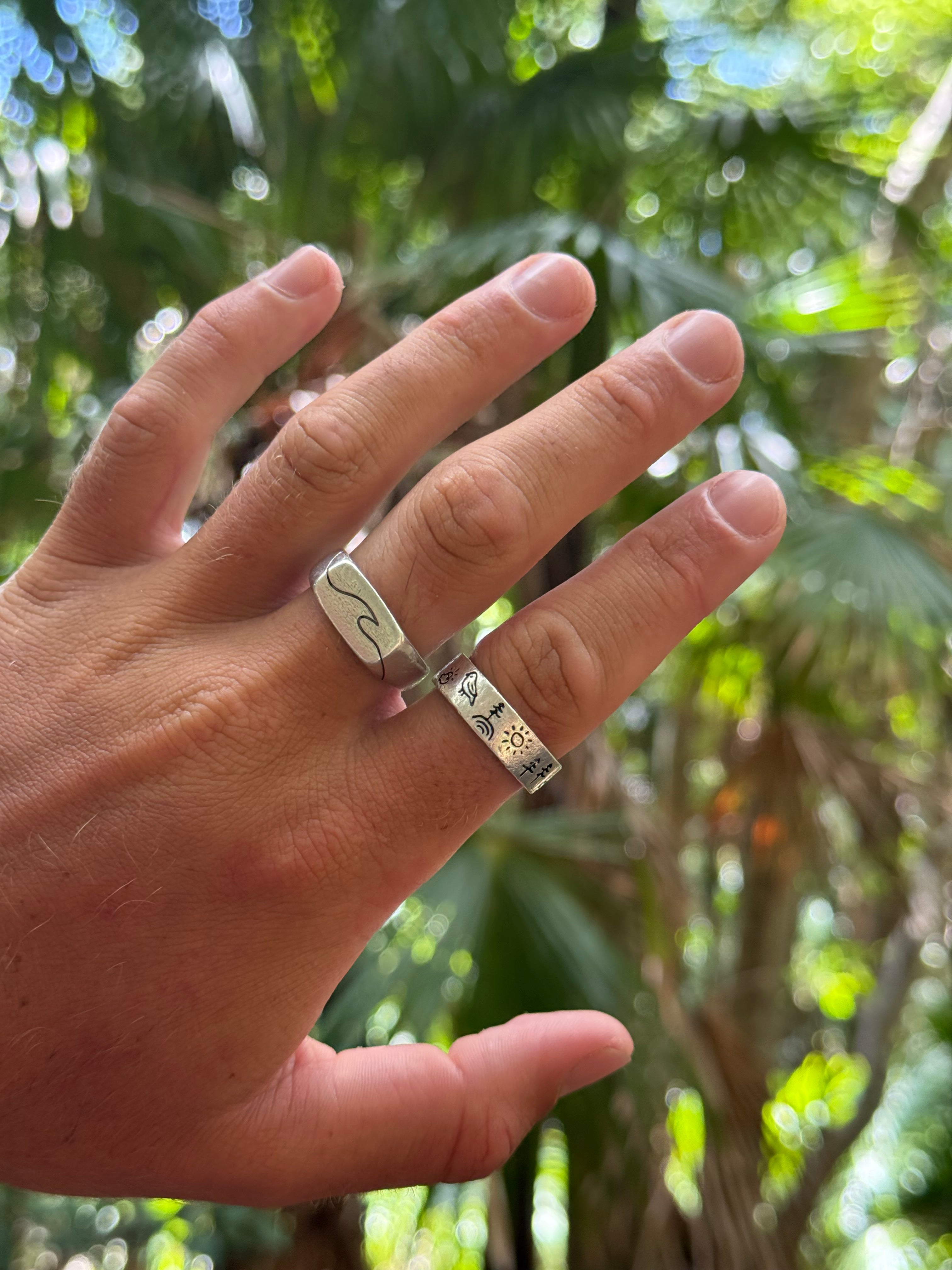
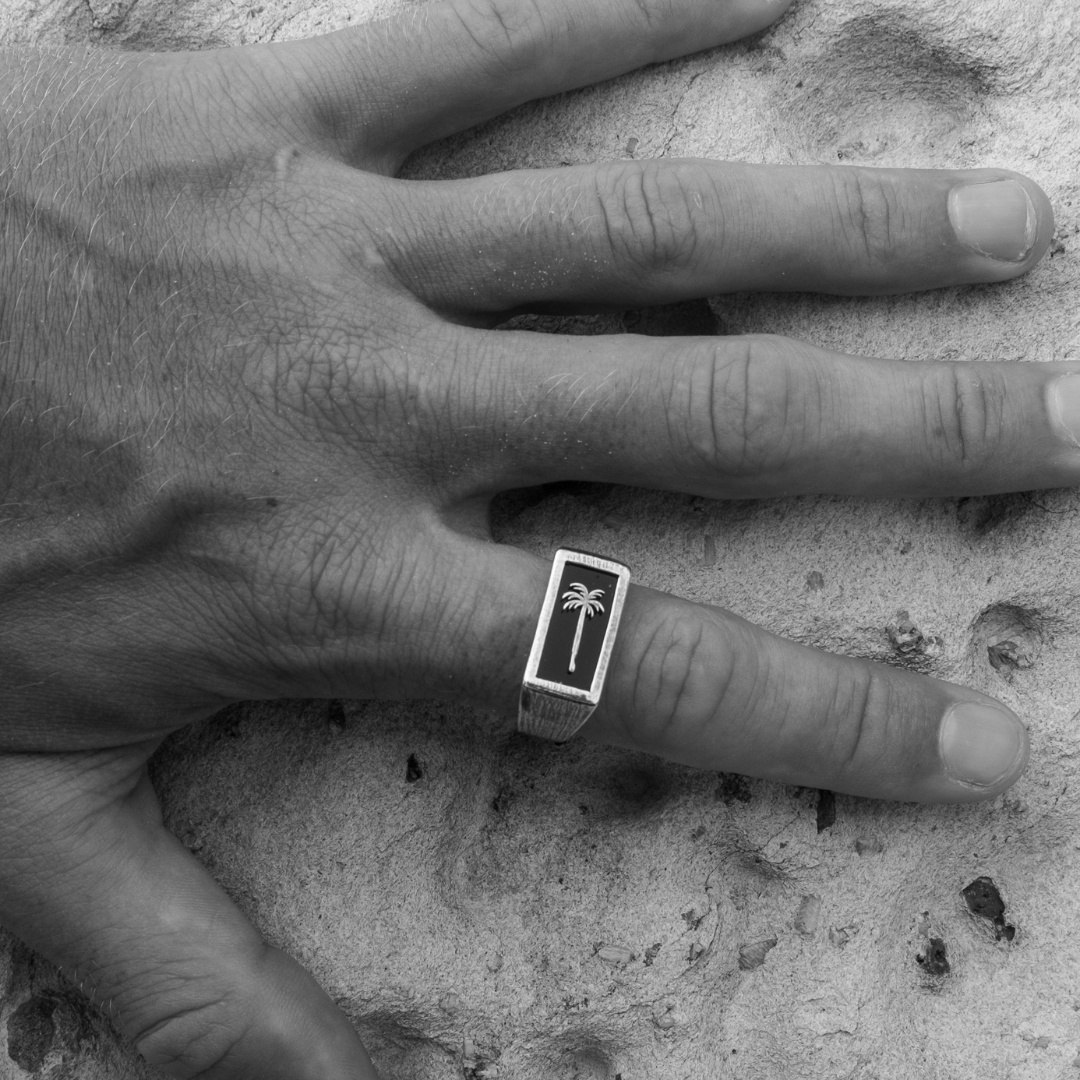
What Metals Turn Green In The Surf?
If you’ve ever worn jewellery in the ocean before, you probably learned the hard way that not all metals survive saltwater.
Green marks on your finger, dull colour after one swim, or the coating peeling off within weeks. It happens because most jewellery is made to look good in a store, not to live in real conditions.
Saltwater is aggressive. It speeds up corrosion, breaks down coatings and exposes whatever metal is underneath. So what a ring is made from matters far more than how it looks on day one.
Here’s why ours hold up.
Sterling Silver With Rhodium Plating
We use 925 sterling silver as the base metal. Sterling silver is durable, solid and widely used in high quality jewellery because it doesn’t contain the reactive metals that cause green staining on skin.
Then it is coated in rhodium.
Rhodium is part of the platinum family of metals and is extremely resistant to corrosion and tarnish. It acts like a protective shell over the silver, preventing oxidation and slowing wear from salt, air and water exposure.
What that means in real life You can surf, swim and shower with it without the colour changing or leaving marks on your skin. Over a long time and heavy wear the coating can slowly fade, but the metal underneath is still real silver, not a different coloured metal waiting to show through.
Stainless Steel
Some Drift Culture pieces are made from marine grade stainless steel. This material is specifically known for its corrosion resistance and is commonly used in marine equipment for that reason.
Saltwater does not easily penetrate it, it does not oxidise in the same way cheaper alloys do, and it keeps its colour because it is the same metal all the way through, not plated over something else.
For daily wear and heavy use, stainless steel is one of the most reliable jewellery materials available.
Materials That Don’t Work In The Ocean
We intentionally avoid these because they fail fast in saltwater conditions.
Brass and copper alloys These react with moisture and salt which creates oxidation. That reaction is what leaves green or black marks on skin and causes jewellery to darken quickly.
Zinc alloy or mixed base metals Often used in cheaper jewellery. They rely on thin plating for colour. Once the coating wears, the metal underneath corrodes rapidly and the ring changes colour permanently.
Gold plated fashion jewellery Looks good at first but the plating is usually very thin. Saltwater strips it quickly and exposes the base metal beneath which then stains skin and deteriorates.

Why We Chose These Materials
Drift Culture was designed to be worn through actual life, not taken off before it starts. Surfing, swimming, training and everyday wear all put pressure on jewellery and most materials simply aren’t made for that.
Sterling silver with rhodium plating and stainless steel are reliable because they are stable metals, not temporary finishes. They age naturally rather than failing suddenly.
So you don’t need to think about your ring before a swim. You just go in the water.